
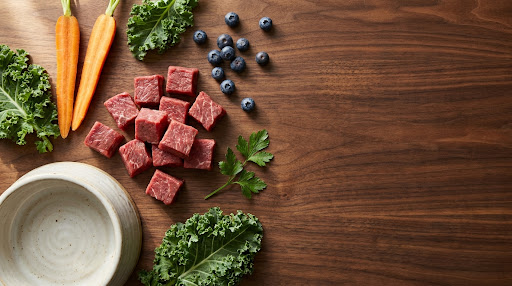
"A plate of chicken, rice, and carrots can look sufficient. It still may miss essentials like calcium and trace minerals unless the recipe is formulated carefully."
Why homemade dog food now.
The shift toward homemade canine diets isn't merely a passing trend; it's a fundamental recalibration of how we view pet health. For decades, the convenience of extruded kibble overshadowed the biological reality of what dogs evolved to eat. Today, armed with better research and a heightened awareness of ultra-processed foods, owners are returning to the kitchen.
However, this movement comes with significant risks. The internet is flooded with well-intentioned but nutritionally disastrous recipes. A bowl of ground beef and sweet potato might evoke a sense of wholesome care, but over months, these rudimentary meals create silent, systemic deficiencies.
We are building a new standard. The goal is no longer just "avoiding kibble," but rather executing precise, biologically appropriate nutrition using fresh ingredients you can recognize. It requires less effort than you think, but more discipline than a viral blog post suggests.
What 'balanced' actually means.
Balance is the most abused word in canine nutrition. In a clinical context, a balanced diet means working toward defined target ranges for essential amino acids, calcium-to-phosphorus ratio, and baseline levels of zinc, iron, and iodine.
Many owners operate under the "balance over time" theory, assuming that rotating proteins and vegetables will naturally cover all bases. While true for humans eating a wildly diverse omnivorous diet, it fails spectacularly for dogs eating the same four or five ingredients daily.
True balance requires formulation. It means utilizing software or professional guidance to map the nutrient density of your ingredients against your dog's specific life stage, weight, and metabolic rate. Anything less is nutritional guesswork.
The five ingredient categories every meal needs.
A clinical homemade diet is constructed systematically. Missing any one of these pillars compromises the structural integrity of the diet over the long term.
- 1. Muscle Protein The foundation. Lean beef, turkey, chicken, or venison. This provides the essential amino acids required for tissue repair and immune function.
- 2. Organ Meat Nature's multivitamin. Liver and secreting organs like kidney or spleen supply critical iron, copper, and fat-soluble vitamins (A, D, E, K).
- 3. Carbohydrate (Optional but optimal) Quality energy sources like quinoa, oats, or sweet potato provide necessary glycogen for highly active dogs and dietary fiber for gut motility.
- 4. Vegetables & Fruit Phytonutrients and antioxidants. Broccoli, kale, and blueberries contribute antioxidant support, dietary variety, and fiber for gut health.
- 5. Calcium & Targeted Supplements The non-negotiable anchor. Bone meal, seaweed calcium, or specific mineral blends to balance the high phosphorus content of muscle meats.
Sunday-batch turkey + sweet potato
Ingredients
- check_circle 900g Lean Ground Turkey
- check_circle 150g Turkey Liver
- check_circle 300g Steamed Sweet Potato
- check_circle 100g Finely Chopped Kale
- check_circle Tailored Bowl Mineral Blend (as prescribed)
Preparation Steps
- 1. Lightly brown the turkey to an internal temp of 165°F.
- 2. Steam sweet potato and kale until tender, then mash to break down cell walls for digestion.
- 3. Fold in raw or lightly seared liver off the heat to preserve delicate vitamins.
- 4. Let cool completely before stirring in the prescriptive mineral blend. Portion into glass containers.
The supplement question.
"Do I really need supplements if I feed whole foods?" Yes. The soil our modern produce is grown in is depleted compared to a century ago, and the meat we buy is raised differently than the wild prey dogs evolved eating.
Whole food diets can fall short in certain trace minerals, most notably zinc, manganese, iodine, and vitamin E. A targeted supplement plan can help close those gaps when reviewed against your dog's life stage and veterinary history.
"A printed recipe is not a plan. A plan is a recipe plus a supplement list plus the math that ties them to your specific dog."
When homemade is wrong for your dog.
As deeply as we believe in fresh feeding, it is not universally appropriate. Dogs with complex renal disease, advanced hepatic failure, or severe pancreatitis need direct veterinary management and may require highly restricted therapeutic diets.
Additionally, if your lifestyle does not permit the time to source quality ingredients, measure them precisely by weight (not volume), and strictly adhere to a formulated recipe, homemade feeding becomes dangerous.
Inconsistently throwing together leftovers is vastly inferior to feeding a high-quality commercial kibble. Commitment to the math is mandatory.
How long it takes in your kitchen.
The romanticized vision of cooking for your dog every night is unnecessary. We advocate for the "Sunday Batch" methodology. By dedicating 60 to 90 minutes on a weekend, you can prepare, portion, and freeze a week's worth of food in one session.
Once the workflow is established—utilizing a large food processor, a heavy-duty scale, and bulk cooking techniques—it becomes a seamlessly integrated part of your weekly routine, requiring less time than a trip to a specialty pet store.
What this guide does not replace.
This editorial is an educational foundation, not clinical advice. It cannot account for your dog's unique metabolic rate, life stage, medications, or undiagnosed conditions.
Always transition diets under the supervision of a board-certified veterinary nutritionist or a DVM well-versed in fresh formulation. Bloodwork panels prior to transition, and six months post-transition, provide the empirical data needed to ensure the diet is functioning as designed.